If you’re buying a home in the Bay Area, SB 684 is a law worth understanding.
SB 684 is a California housing law that took effect July 1, 2024. It’s one of the most practical tools the state has introduced to open up new homeownership pathways in high-cost markets.
But what does it actually mean for Bay Area buyers?
California has one of the lowest homeownership rates in the country, at 55.3%. The Bay Area sits at the most extreme end of that affordability problem. SB 684 was designed to cut through the bureaucratic barriers that have blocked starter home development for decades.
Here’s what this guide covers:
What SB 684 is and why California passed it
Who qualifies and what the eligibility requirements look like
What this law means specifically for Silicon Valley buyers
How SB 684 compares to SB 1123
How to take advantage of it with the right builder
What is SB 684?
SB 684 is a California law signed in 2023 and effective July 1, 2024. It requires cities and counties to fast-track approval for small housing developments of up to 10 homes on qualifying urban infill sites. No public hearings, lengthy environmental review or council votes.
The problem it was built to solve
California’s housing affordability gap is severe. The state’s home price-to-income ratio sits at 8.4, nearly double the national average of 4.7. In San Jose specifically, that ratio climbs to 11.65. The Bay Area is one of the most extreme examples of this problem anywhere in the country.
For decades, bureaucratic barriers have blocked the small-scale, attainable housing development that first-time buyers actually need. SB 684 targets that problem directly. It was designed to unlock starter home development at scale: smaller, naturally more affordable homes on underutilized urban land.
How it works: ministerial approval explained
The key mechanism behind SB 684 is ministerial approval. Here’s what that means in plain terms:
- The project is checked against objective standards: zoning rules and building codes
- No discretionary review, public hearings, or council votes required
- Cities must approve qualifying projects within 60 days, or the application is automatically deemed approved
- Projects are also exempt from CEQA (California’s environmental review process), which typically adds months or years to timelines
That 60-day window is significant. Bay Area permitting is notoriously slow. SB 684 puts a hard deadline on it.
Who Qualifies Under SB 684?
SB 684 has specific eligibility requirements. Not every lot qualifies, and understanding the criteria upfront saves time.
Eligible lot and zoning requirements
To qualify under SB 684, a site must meet all of the following:
- Zoned for multifamily residential use – per SB 1123, effective July 1, 2025, extended this to vacant single-family lots, more on that below
- 5 acres or smaller
- Substantially surrounded by qualified urban uses: residential, commercial, retail, or transit-adjacent development
- Located within an incorporated city or urbanized area
- Not previously subdivided under SB 684 or SB 9
Size and unit restrictions
The law also sets clear limits on what gets built. These limits are what keep SB 684 focused on starter homes rather than luxury development:
- Up to 10 new parcels and 10 residential units on the original site
- Each new parcel must be at least 600 sq ft
- Average net habitable floor area across all homes cannot exceed 1,750 sq ft
- Units can be sold as fee-simple lots, common interest developments, housing cooperatives, or community land trusts
That 1,750 sq ft average cap is intentional. It keeps these projects in the attainable range — the kind of homes that first-time buyers can realistically afford in high-cost markets like the Bay Area.
What SB 684 Means For Bay Area Homebuyers
SB 684 has direct implications for buyers in Silicon Valley. It isn’t just a statewide policy story.
More starter home options in Silicon Valley
Santa Clara County needs 129,577 new homes permitted by 2031. Most jurisdictions are falling well short of that target.
Most of Silicon Valley’s prime land was developed by the 1980s. Infill development on underutilized urban parcels is the only realistic path to meaningful new supply. SB 684 unlocks multifamily-zoned lots across the South Bay for small cluster developments of townhomes and cottages.
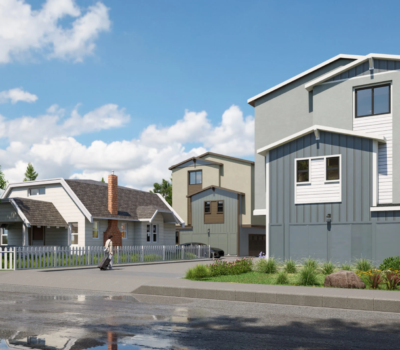
That creates a new category of attainable for-sale homes in cities like San Jose, Sunnyvale, and Campbell. A cluster of 8 to 10 townhomes on an infill lot can come in well below the $1M-plus single-family market that dominates Silicon Valley today.
Faster permitting, faster move-in
Bay Area permitting is notoriously slow and fragmented. San Jose, Palo Alto, Mountain View, and Sunnyvale each run their own independent permitting processes with separate requirements, timelines, and review standards.
SB 684’s 60-day mandatory approval window cuts through that complexity. Builders who already know each city’s local requirements can move even faster. Learn more about how long it takes to build a new home in the Bay Area and what affects your timeline.
SB 684 Vs. SB 1123: What’s The Difference?
Both laws are part of California’s broader Starter Home Revitalization Act framework. They work together to expand where and how starter homes can be built across the state.
Here’s how they differ in practice:
- SB 684: Effective July 1, 2024. Applies to multifamily-zoned parcels of up to 5 acres. This is the law already in effect across Silicon Valley.
- SB 1123: Effective July 1, 2025. Extends the same ministerial approval pathway to vacant lots in single-family zones of up to 1.5 acres. This opens up significantly more of California’s urban land.
The practical difference comes down to reach. SB 684 unlocks multifamily-zoned infill sites that were already intended for denser housing. SB 1123 goes further and opens up vacant lots in neighborhoods that previously had no pathway to small-scale development.
Together, they form a faster, more accessible approval system for starter homes across California.
AL Homes builds in the multifamily-zoned infill areas where SB 684 applies today, and is positioned to move quickly as SB 1123 continues to expand eligible sites.
How to Take Advantage of SB 684 in the Bay Area
SB 684 removes real bureaucratic barriers. But removing barriers isn’t the same as having a clear path forward. You still need a builder who can identify eligible sites, design within the law’s constraints, and execute construction without gaps.
Why working with a fully integrated builder matters
Most builders specialize in one part of the process. Some focus on land. Others on design. Others on construction. Each handoff between separate firms creates room for delays, miscommunication, and cost overruns that fall on the buyer.
A fully integrated builder handles all of it under one roof. That matters especially when working within SB 684’s 60-day approval window. One team managing land, design, permitting, and construction means fewer surprises and a faster path to move-in. Learn more about what to look for in a new home builder in California.
How AL Homes navigates permitting in-house
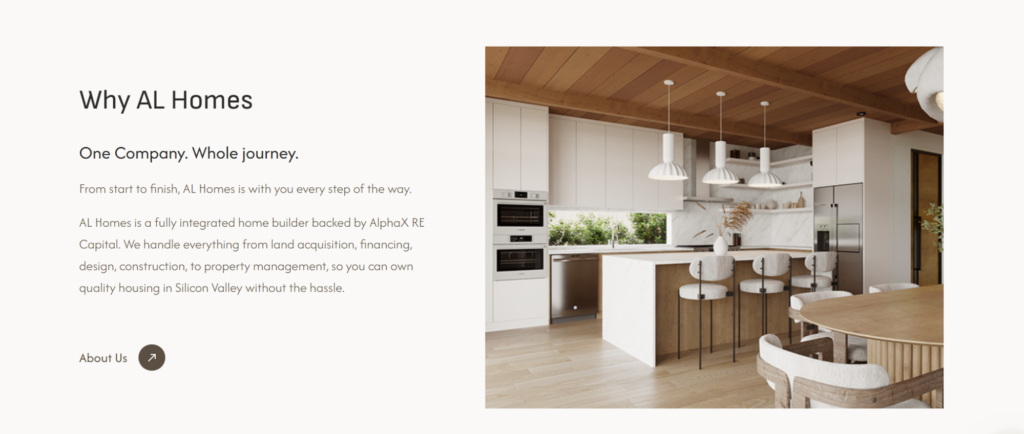
AL Homes was built around a specific gap in the Bay Area market: the missing middle. These are buyers who earn too much to qualify for subsidized housing but face steep competition in Silicon Valley’s single-family market. Teachers, nurses, first-generation buyers, and young families trying to put down roots in the communities where they work. SB 684 creates a real pathway for exactly this group, and AL Homes is built to execute it.
AL Homes is a fully integrated builder backed by AlphaX RE Capital, with a mission to build better homes, strengthen communities, and make Silicon Valley living more accessible. The team manages the permitting process directly across every major South Bay city: San Jose, Palo Alto, Mountain View, and Sunnyvale.
There’s no learning curve or third-party coordination. From land acquisition to construction to move-in, every stage stays under one roof.
That end-to-end control is exactly what SB 684 projects demand. The 60-day approval clock starts the moment a completed application lands at the city. A builder who already knows the local process hits that window with confidence. Learn more about what Bay Area buyers need to know before buying new.
Conclusion
SB 684 cuts through the bureaucratic barriers that have blocked starter home development in the Bay Area for decades. The opportunity is real, but only with a team that can execute it locally.
AL Homes builds in the multifamily-zoned infill areas where SB 684 applies today. One team handles every stage, from land acquisition through move-in.
Browse available homes and communities or book a free consultation to take the next step.
FAQs: What is SB 684?
What is the difference between SB 684 and SB 1123?
SB 684 applies to multifamily-zoned lots up to 5 acres. SB 1123, effective July 1, 2025, extends the same fast-track approval to vacant single-family lots up to 1.5 acres.
Who qualifies for SB 684 in California?
Projects on multifamily-zoned urban lots of 5 acres or less, with up to 10 units averaging no more than 1,750 sq ft each, substantially surrounded by urban uses.
Does SB 684 apply to single-family zones?
No. SB 684 covers multifamily zones only. SB 1123, effective July 2025, extended ministerial approval to vacant single-family lots.
How does ministerial approval work under SB 684?
Cities must approve qualifying projects within 60 days, based on objective standards only. No public hearings, council votes, or CEQA review required.
What is the home size limit under SB 684?
Units must average no more than 1,750 net habitable sq ft across the development. Individual units can vary as long as the average stays within that limit.