The best Bay Area neighborhoods for buying new depend on more than schools, commute times, and nearby restaurants. You also need to know where new homes are available and how each location affects your options.
A neighborhood may fit your lifestyle but offer few opportunities to buy new. For buyers considering a custom build, lot conditions and local permitting requirements add another layer to the decision.
This guide compares Cupertino, San Jose, Sunnyvale, Santa Clara, and Campbell through a new-construction lens, helping you evaluate:
- Where to look for new homes and how locations compare
- What to check about soil, seismic conditions, and construction timelines
- How AL Homes’ building process can guide your next steps
Why “Best Neighborhood” Looks Different When You’re Buying New
Schools, parks, and commute times help you compare locations, but buying new adds questions about availability and construction readiness.
The criteria generic neighborhood lists leave out
Lifestyle rankings are a starting point, but new-construction buyers also need details about available homes, project approvals, and site conditions. A useful shortlist should consider:
- Lot availability: Look for suitable homesites or builder projects offering the home type you want.
- Permitting progress: Ask which approvals a project has received and what still needs review.
- Zoning and site conditions: Check how development rules, soil, and seismic conditions could affect the proposed home.
- Active builder presence: Identify builders with local projects, clear construction updates, and homes you can visit.
These filters help you distinguish a desirable location from a realistic opportunity within your budget and timeline.
Where new construction actually exists in the Bay Area right now
Cupertino, San Jose, Sunnyvale, Campbell, and Santa Clara offer starting points for buyers comparing new homes in the South Bay. Current projects include individual homes and smaller communities, with availability and completion dates varying by property.
Your search can also extend to Peninsula cities such as Menlo Park, Los Altos, and Palo Alto. New-home listings exist in these markets, so excluding them outright could mean overlooking a suitable property.
Our Bay Area new homes guide explains what to consider as you compare properties and prepare to buy.
Top Bay Area Neighborhoods For New Construction
Start with these cities, then narrow your search to neighborhoods and projects that fit your daily routine.
Cupertino: School access and new-home availability
Cupertino deserves a closer look if schools are central to your search. Keep these considerations in mind:
- School assignments: Check each address through Cupertino Union School District’s locator. Results are preliminary, with official assignments confirmed during registration.
- New-home availability: Compare current listings and upcoming releases against your budget, preferred home type, and move-in date. Our Cupertino new homes guide explains local buying considerations.
- Purchase readiness: Prepare financing early, then confirm completion estimates, included finishes, and contract terms before committing.
Best fit: Buyers who prioritize school access and can stay flexible on home selection and move-in timing.
San Jose: Different neighborhoods, different new-home options
San Jose gives buyers several areas to compare, but a neighborhood shortlist should reflect actual projects and your daily routine.
- Neighborhood search: Consider Willow Glen, Almaden Valley, Evergreen, Silver Creek, and North San Jose. Check current listings before assuming each has suitable new homes available.
- Development context: San Jose’s major development projects page shows proposed, approved, and ongoing developments. Check whether a project involves homes for sale, rental housing, or another use.
- Budget comparisons: Compare specific homes with Cupertino options, accounting for square footage, lot size, included features, and school assignments. Our San Jose new homes guide explains how buying considerations vary across the city.
Best fit: Buyers who want to compare several neighborhoods to find a new home that matches their budget and commute.
Sunnyvale: Townhomes and everyday convenience
Sunnyvale offers townhome and individual-home projects, but walkability and commute convenience depend on the property’s exact location.
- Ortega area: Ortega has a documented new townhome project. Compare its layout, outdoor space, and parking with your needs. Our Sunnyvale new homes guide covers local options.
- Walkability: Walk the routes to groceries, parks, and transit to assess how the location fits your routine. Review downtown development plans for context on nearby changes.
- Construction status: Use the city’s development projects resources to investigate nearby proposals. Confirm sales availability and delivery dates separately with the builder.
Best fit: Buyers comparing townhomes and individual homes who want to assess convenience at the address level.
Santa Clara and Campbell: Additional South Bay options
Santa Clara and Campbell give buyers additional South Bay locations to consider, with different development opportunities and transit connections.
- Campbell’s smaller developments: The city’s starter home program allows qualifying developments of up to 10 homes. Its application tracker helps distinguish proposed projects from approved ones, although approval does not establish sales availability.
- Santa Clara’s transit access: Check each property’s distance and route to Santa Clara Caltrain Station. Living in the city does not automatically mean convenient walking access to the station.
- Property-level tradeoffs: Compare outdoor space, shared walls, parking, and any HOA fees alongside price and expected completion.
Best fit: Buyers broadening their South Bay search who can compare different home types and neighborhood settings.
View available homes to compare current properties with your budget and move-in plans.
What To Check Before You Commit To A Neighborhood
Once you have a shortlist, look beyond neighborhood amenities to the conditions affecting the specific property and its construction.
Soil and seismic conditions can vary within the same city
A city’s name cannot tell you how a particular lot will perform during an earthquake. Soil conditions, slopes, and mapped hazards require closer investigation.
California Geological Survey identifies zones susceptible to liquefaction and earthquake-induced landslides. Most housing developments within these zones require site-specific geotechnical investigations before permitting.
Before committing, check:
- Mapped hazards: Use California’s official EQ Zapp hazard viewer to screen the property’s location.
- Site investigations: Ask the builder which geotechnical studies informed the foundation design and what mitigation measures were required.
- Lot conditions: Ask how slope, drainage, and soil conditions have been addressed in the approved plans.
A mapped hazard zone calls for further investigation; it does not automatically rule out construction. Our guide to finding Bay Area land explains additional homesite considerations.
Permitting timelines differ from city to city
Local zoning, required approvals, and plan revisions can affect when a new home is ready. A “coming soon” listing alone doesn’t show how far along the project is.
San Jose publishes plan review time frames for its standard review service. These cover particular review stages, rather than the complete period from application to move-in.
Ask the builder:
- Approvals: Which planning approvals and building permits have been issued, and which remain outstanding?
- Schedule: Does the completion estimate include remaining permitting, construction, inspections, and utility connections?
- Delays: How will schedule changes affect your closing date, financing, and current housing arrangements?
AL Homes’ San Jose construction guide estimates 12-24 months for Bay Area projects, depending on permitting and complexity. Ask the builder what its estimate includes and request a schedule specific to the property.
Why Buying New Construction With A Fully Integrated Builder Matters
Your neighborhood choice also involves the team developing the property. Understanding that team’s responsibilities helps you ask clearer questions before buying.
One team from land acquisition to move-in
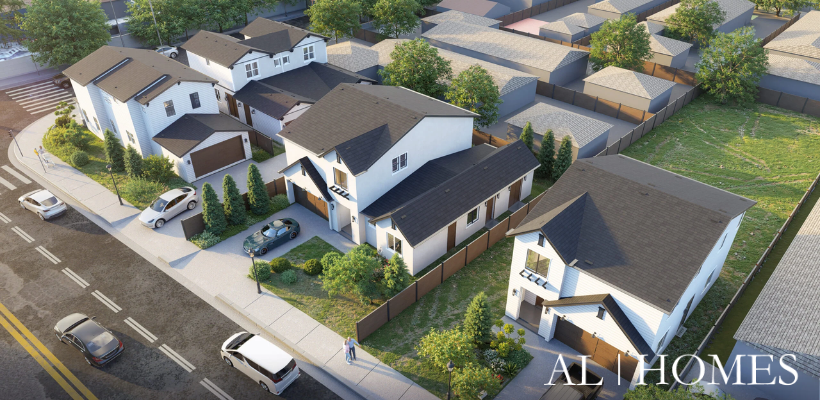
AL Homes manages land acquisition, financing, design, construction, and property management internally. This integrated model connects site selection with the design and delivery of the finished home.
For buyers, this gives neighborhood questions a direct line to the team developing the home. Ask how site selection influenced the design and who will communicate with you through purchase and move-in.
Support also continues after closing. AL Homes provides homeowner orientation, a maintenance guide, and a Builder Limited Warranty. Review the warranty terms and service-request process before signing.
Where to explore AL Homes projects
AL Homes’ current project listings span all five cities covered in this guide. They include named communities and individual homes:
- Cupertino and Sunnyvale: The Meridian at McClellan and The Crescent appear in the community portfolio.
- San Jose and Campbell: Listed communities include The Kirk, The Mancuso, and 300 Redding.
Explore AL Homes’ community homes to identify projects that match your preferred location and home type. Confirm each property’s sales status and construction progress with the team, since listings can change.
Schedule a tour to discuss your shortlist, see available homes, and ask neighborhood-specific questions.
Find The Right Neighborhood For Your New Home
The best Bay Area neighborhoods for new construction combine your lifestyle priorities with homes that fit your budget and timeline. School assignments, commute routes, site conditions, and construction progress all deserve attention before you commit.
Use this guide to narrow your search, then compare specific properties in person. AL Homes’ projects across these markets give you concrete options to explore with a team involved in their development.
View available homes to find a starting point for your next move.
FAQs: Bay Area Neighborhoods
What is the best Bay Area neighborhood for new construction?
The best choice depends on your budget, commute, school needs, and move-in timeline. Compare specific projects across Cupertino, San Jose, Sunnyvale, Santa Clara, and Campbell rather than relying on city rankings.
Which Bay Area cities have new construction homes available in 2026?
Current listings include projects in San Jose, Cupertino, Sunnyvale, Campbell, and several Peninsula cities. Some homes have later completion dates, so confirm availability and delivery timing directly with the builder.
Is new construction more expensive than resale in the Bay Area?
There is no universal price difference. Compare similar homes in the same area, including size, lot, finishes, and condition. Factor potential resale repairs and new-home upgrades or HOA fees into your total budget.
How long does it take to build a new home in the Bay Area?
AL Homes estimates 12-24 months for Bay Area projects, depending on permitting and complexity. Ask what the estimate includes and how much work remains on your chosen property.
Can I buy a new AL Homes property before selling my current home?
Yes, eligible buyers can explore Buy Now, Sell Later. AL Homes also offers a Trade-In program. Confirm property eligibility, financing requirements, costs, and terms with the team.