Most buyers start pricing out a custom home before they ever talk to a lender, then find out the financing doesn’t work like a normal mortgage. If you’re buying resale, the loan closes against a home that already exists. If you’re building, the loan closes against a home that doesn’t exist yet, and that single difference changes who lends you the money, how it gets released, and what they want to see from you before they’ll approve it.
Quick answer: Most custom builds in Silicon Valley are financed with a construction-to-permanent loan, which rolls the build and the eventual mortgage into one loan and one closing. Veterans have a separate VA-backed path with different down payment rules. Because AL Homes manages land, design, and construction under one roof, you’re working with a builder lenders already recognize, instead of trying to convince them to underwrite a first-time crew.
Why Custom-Build Financing Works Differently
Lenders underwrite a resale mortgage against an appraised, finished property. There’s no equivalent asset to point to on a construction loan, just a set of plans, a budget, and a builder.
That changes three things about how the money moves. First, you don’t get the full loan amount at closing. Lenders release funds in draws tied to construction milestones like foundation, framing, and roofing, with an inspection at each stage before the next draw goes out. Second, the builder’s track record matters almost as much as your credit score, since the project’s completion depends on both. Third, most construction loans run 12 to 18 months before converting to permanent financing, so you’re financing a timeline, not just a purchase price.
Building with a builder who already has a lending history, rather than a first-time or one-off crew, tends to move faster through underwriting for exactly this reason. Lenders have seen the builder finish projects before and know what to expect.
The Financing Options Bay Area Buyers Actually Use
Construction-to-permanent loans
Construction-to-permanent loans are the most common path for a custom build. Instead of taking out a short-term construction loan and then refinancing into a mortgage once the home is finished, a construction-to-permanent loan rolls both into a single loan and a single closing. You lock in your permanent rate (or a rate structure) before construction even starts, which removes the risk of rates moving against you mid-build.
VA construction loans
VA construction loans give veterans and active-duty service members a path to build with the same no-down-payment benefit that applies to a standard VA mortgage, though far fewer lenders offer the construction version than the resale version. If you’re eligible, it’s worth confirming early which local lenders actually originate VA construction loans, since not every VA-approved lender does.
Cash and HELOC-funded builds
Cash and HELOC-funded builds show up mostly among buyers who already own their lot outright or are tapping equity from an existing property. Skipping construction-loan underwriting entirely means a faster start and no draw-inspection process to manage, but it also means tying up more of your own capital for the length of the build.
What Lenders Want to See Before Approving a Construction Loan
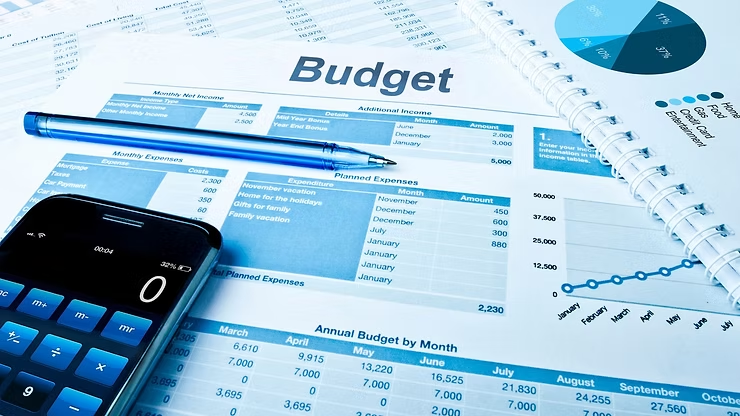
A construction loan application looks different from a mortgage application, and it helps to know that going in. Lenders want to see the builder’s history of finishing projects on budget and on schedule, since a stalled build puts their collateral at risk before it’s even built. They’ll also want a firm, written budget, not a rough estimate, because construction loans are sized against the total project cost rather than a purchase price.
Down payment expectations tend to run higher than a resale mortgage too. Most conventional construction-to-permanent loans ask for 10 to 20% down, and lenders often want to see a contingency reserve on top of that, since construction budgets move more than resale prices do. Finally, they won’t release the first draw until permitting is complete. A project still waiting on city approval isn’t bankable yet, no matter how solid the plans look.
What to Prepare Before You Apply
A construction loan application asks for more than a typical mortgage application, so it helps to have these ready before you sit down with a lender:
- A detailed project budget, broken down by category (land, design, permits, construction, contingency) rather than a single total. Lenders sizing a loan against total project cost need to see how that cost was built, not just what it adds up to.
- Your builder’s credentials and track record. Expect to provide the builder’s license information, insurance, and a record of completed projects. This is where working with an established builder saves real time, since AL Homes’ history with local lenders is already documented rather than something you have to compile from scratch.
- Approved plans or a clear permitting timeline. You don’t need final permits in hand to start the loan conversation, but lenders want to see that plans are far enough along that permitting is a matter of when, not if.
- Proof of funds for your down payment and contingency reserve, separate from the loan amount itself. This is the piece buyers most often underestimate going in.
When to Start the Financing Conversation
The financing conversation should start before you’ve picked a lot or committed to a floor plan, not after. Lenders will want to see your budget, your builder, and a realistic timeline together, and it’s much easier to shape those three things around what a lender will actually approve than to design a project first and hope the numbers work.
This is one of the practical advantages of working with a builder who handles land, design, and construction in-house. You’re not trying to line up three separate parties’ schedules and budgets before you can even get a loan application started.
How AL Homes Simplifies Financing
Coordinating separately with an architect, a contractor, and a lender who’ve never worked together usually means the buyer ends up doing that coordination themselves, chasing updates and reconciling numbers across three companies. AL Homes controls land acquisition, design, and construction in-house and is backed by AlphaX RE Capital, so lenders are underwriting against one established party instead of a patchwork of subcontractors they’ve never vetted. If you want financing support alongside the build itself, AL Homes can also connect you with its network of trusted partners.
Frequently Asked Questions
Can I get a construction loan with less than 20% down?
Can I get a construction loan with less than 20% down?
It depends on the lender and loan type. VA construction loans can go to 0% down for eligible veterans. Most conventional construction-to-permanent loans ask for 10 to 20% down, similar to a jumbo mortgage.
Does AL Homes work with specific lenders?
Does AL Homes work with specific lenders?
AL Homes doesn’t underwrite loans directly, but connects buyers with partners experienced in Bay Area construction financing. Talk to the team about a referral before you start shopping lenders on your own.
What's the difference between a construction loan and a construction-to-permanent loan?
What's the difference between a construction loan and a construction-to-permanent loan?
A standalone construction loan only covers the build, and you have to refinance into a separate mortgage once it’s done, which means two closings and two sets of closing costs. A construction-to-permanent loan combines both into one loan and one closing from the start.
How much of the loan do I need approved before breaking ground?
How much of the loan do I need approved before breaking ground?
Lenders require the full loan approved and the first draw scheduled before construction starts. That first disbursement ties to site work and foundation, not the full loan amount released all at once.
Do interest rates on construction loans work differently than a regular mortgage?
Do interest rates on construction loans work differently than a regular mortgage?
Yes. Construction loans are usually interest-only during the build, calculated on the amount drawn so far rather than the full loan balance, since you’re not paying interest on money you haven’t received yet. Once the loan converts to permanent financing, it shifts to a standard amortizing payment.
Can I use a construction loan if I already own the lot?
Can I use a construction loan if I already own the lot?
Yes, and it often works in your favor. Lot equity can count toward your down payment requirement, which lowers the cash you need to bring to closing.
What happens if construction costs go over budget mid-build?
What happens if construction costs go over budget mid-build?
This is exactly what the contingency reserve lenders require is for. If costs run over beyond that reserve, you’d need to cover the difference out of pocket or work with your lender on additional funds, which is why an accurate budget upfront matters more on a construction loan than almost anywhere else in the process.
Ready to Talk Financing?
Figure out your financing path before you commit to a lot or a floor plan. Talk to the AL Homes team about your project, and we’ll walk through what financing looks like for your specific build.