California’s 2025 legislative session delivered the biggest housing shakeup in years. Lawmakers passed a wave of bills aimed at boosting supply. SB 79 was signed into law on October 10, 2025, and takes effect July 1, 2026, according to Holland & Knight.
If you are planning to buy or build in the Bay Area, these changes are worth understanding. They shape what gets built near you and how fast it happens.
This guide covers what these new laws actually mean for you as a homebuyer. Here’s what you’ll learn:
- What SB 79 changes near Bay Area transit stations starting July 2026
- How recent starter home and California Environmental Quality Act (CEQA) reforms already speed up small developments
- What this means if you are buying or building in Silicon Valley now
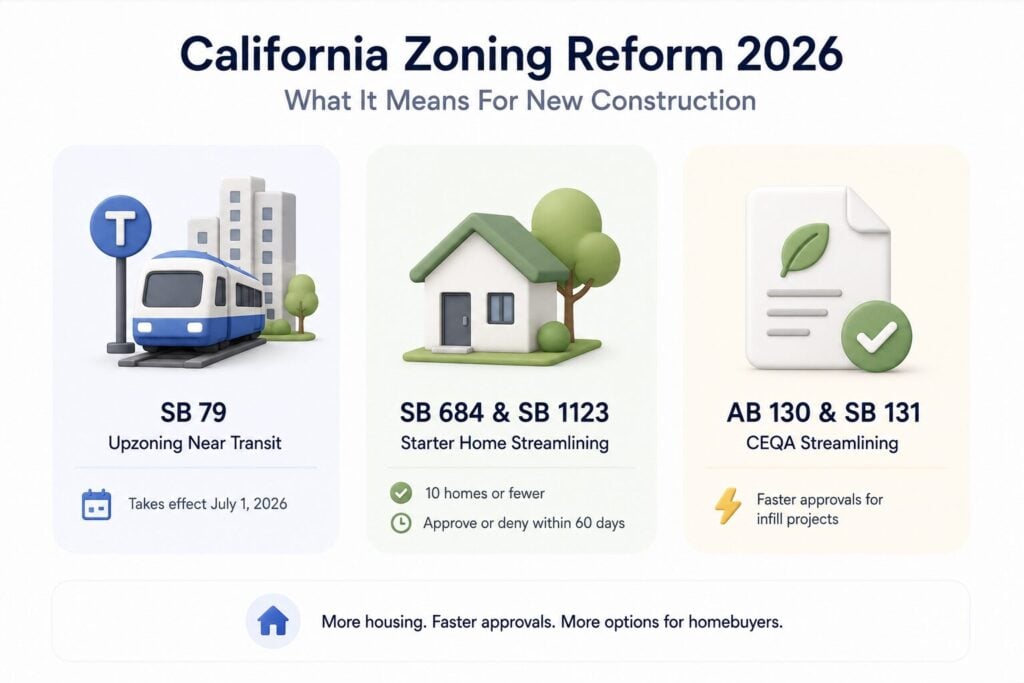
California Zoning Reform 2026: What It Means For New Construction
California zoning changed more in the last two years than in the previous decade combined. New laws override old single-family zoning rules and speed up approvals for smaller developments. Here is what actually changed and where it applies.
SB 79: upzoning near transit stations
SB 79 overrides local zoning limits near transit stops, according to Holland & Knight. It allows taller, denser housing in areas that previously permitted single-family homes only.
Key details:
- Applies in counties with significant rail infrastructure, including Santa Clara, San Mateo, San Francisco, and Alameda
- Covers areas within half a mile of major stops like Caltrain, BART, and VTA stations
- Allows building heights between 55 and 75 feet depending on proximity and transit type, with additional height allowed near certain high-frequency stops
- Takes effect July 1, 2026
For homebuyers, this could mean more housing options near transit corridors in the coming years. If you have been eyeing a walkable neighborhood near a Caltrain or VTA stop, our available homes already include options close to these growth areas.
SB 684 and SB 1123: starter home streamlining
Two related laws already speed up approval for small housing developments. SB 684 took effect January 1, 2024. It provides streamlined ministerial approval for qualifying projects in multifamily zoning districts. SB 1123 extended that same process to vacant lots in single-family zoning districts, effective July 1, 2025, according to Allen Matkins.
Key details:
- Covers qualifying developments of 10 homes or fewer
- Grants ministerial approval, meaning no public hearing and no discretionary review
- Requires local agencies to approve or deny within 60 days of a completed application
- Applies to both multifamily zoning districts and vacant single-family lots
This matters directly for homeownership access. Smaller, more attainable homes on small lots now reach the market faster than under the old process.
If you are exploring starter homes in established Bay Area neighborhoods, this is part of why more may be showing up.
CEQA streamlining: AB 130 and SB 131
California also reformed its environmental review process. Governor Newsom signed AB 130 and SB 131 into law on June 30, 2025, and both took effect immediately, according to Greenberg Traurig.
Key details:
- AB 130 creates a new exemption from the California Environmental Quality Act (CEQA) for qualifying infill housing projects up to 20 acres
- Exempt projects skip lengthy environmental studies, public notice requirements, and alternatives analysis
- SB 131 limits CEQA review for projects that narrowly miss qualifying for an existing exemption, focusing review only on the disqualifying issue
- Both laws apply broadly across California
According to Meyers Nave, these reforms mean qualifying infill projects can move from application to a final decision in as little as 90 to 120 days. Traditional CEQA review can add months or even years for mid-size and larger urban projects requiring a full environmental impact report, according to Harris & Associates.
For buyers, faster permitting can translate into more new construction reaching the market sooner, particularly on smaller urban lots.
What These Changes Mean If You’re Buying Or Building In Silicon Valley
New laws open the door to more housing, but that does not mean instant relief for today’s buyers. Entitlement changes take years to translate into finished homes on the ground. Here is what to actually expect in the near term, and how to navigate the transition.
More future supply, but don’t expect overnight relief
These new laws expand what can legally be built across the Bay Area. That does not mean inventory loosens up right away. Entitled projects still take months or years to reach completion, even under faster approval rules.
Market conditions over the three months ending May 2026:
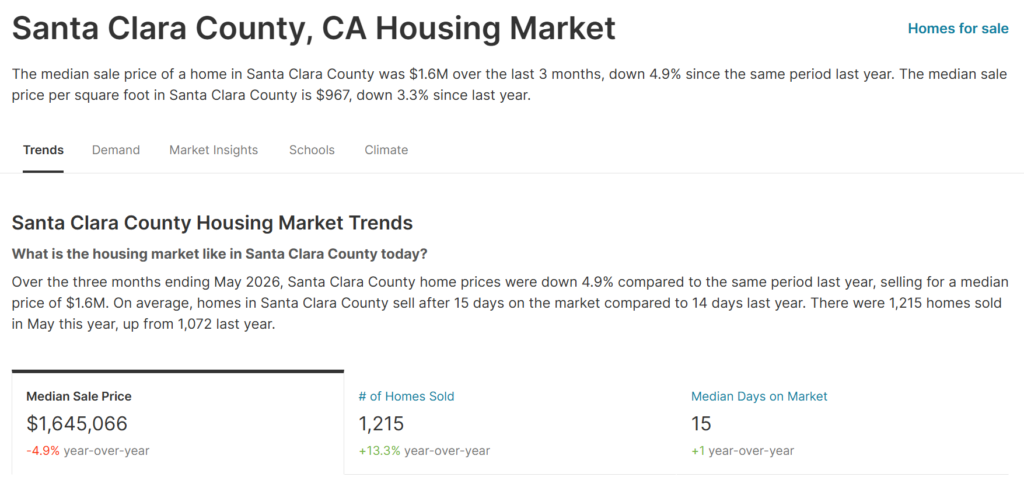
- Santa Clara County’s median home sale price is $1.6M, down 4.9% year-over-year, according to Redfin
- Homes sold in the county rose 13.3% year-over-year, showing demand remains strong
- The typical home sells in 15 days, still a fast pace by national standards
If you are searching for a home today, these zoning and CEQA reforms are unlikely to change your options this year. They matter more for what gets built over the next three to five years.
If you want to compare your options right now, see how new construction stacks up against resale in today’s market.
Why an integrated builder matters more right now
Shifting zoning rules create real complexity for anyone trying to build right now. A builder who tracks these changes closely can save you significant time and risk.

AL Homes manages permitting and compliance in-house as part of its fully integrated process. That means one team tracks these legal changes on your behalf, rather than leaving you to coordinate between separate architects, permitting consultants, and contractors.
Book a free consultation with AL Homes to talk through what these law changes mean for your specific project. Or explore the Trade Your Home program if you are weighing a move into new construction.
Conclusion
California’s housing laws are shifting fast, but the fundamentals of buying or building smart in Silicon Valley have not changed. Location, timing, and choosing the right partner still matter most.
AL Homes tracks these legal changes closely so you do not have to sort through zoning code and legislative alerts on your own. Having a fully integrated builder on your side means one team handles the complexity for you.
Ready to see what’s available? Browse homes across Silicon Valley and find the one that fits your plans.
FAQs: California Housing Laws 2026
What are the new housing laws in California 2026?
SB 79 takes effect July 1, 2026, allowing denser housing near transit stops. It builds on starter home and CEQA reforms already in effect since 2024 and 2025.
What are the key new California laws taking effect in 2026?
SB 79 is the main 2026 law, upzoning areas near major transit stops in counties like Santa Clara, San Mateo, and Alameda starting July 1, 2026.
What are the new housing laws in California?
Recent laws include SB 79 (transit upzoning), SB 684 and SB 1123 (starter home streamlining), and AB 130 and SB 131 (CEQA reform for infill housing).
Important notice: This article is for general information only and is not legal advice. Consult a real estate attorney for guidance specific to your situation.