Resale inventory in the Bay Area sits near historic lows in 2026. As of March 2026, Santa Clara County has just 1.5 months of housing supply, and San Mateo County sits at 1.3 months, well below the three months considered balanced. Most resale homes date back to the 1950s through 1970s, meaning outdated electrical, aging HVAC, and kitchens that need work.
New construction has its own cost complexity, too. Bay Area labor, seismic engineering, and strict energy codes push per-square-foot costs above national averages. If you’re still weighing whether to buy or build, sticker prices for both options can look surprisingly close.
This guide breaks down what buyers actually spend, not just what shows up at closing.
- Real 2026 resale prices across Santa Clara, San Mateo, and San Francisco counties
- Hidden resale costs, including California’s shifting insurance landscape
- True new construction costs per square foot in Silicon Valley
- Total cost of ownership: maintenance, energy, and resale value
- How today’s mortgage rates are reshaping the build versus buy decision
What Resale Homes Actually Cost in the Bay Area In 2026
Resale prices vary by county, but all three core Bay Area markets remain expensive in 2026. Buyers also compete for a limited, aging pool of homes.
Purchase price and inventory reality
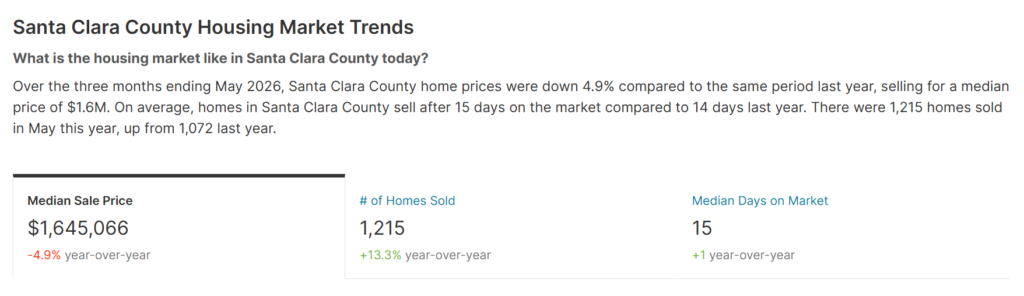
May 2026 is the most recent data Redfin has published, since sales figures take time to compile after closing. Over the three months ending May 2026, Santa Clara County’s median sale price was $1,645,066, down 4.9% year over year. San
Mateo County’s median reached $1,794,617, up 2.5%. San Francisco’s median hit $1,761,716, up 14.1%, reflecting continued demand from AI industry hiring alongside tight listings.
Inventory is the bigger issue. With months of supply well below balanced levels, buyers have few options to choose from, and much of what’s available needs work:
- Electrical panels that may not support modern appliance loads
- HVAC systems nearing or past their expected lifespan
- Kitchens and bathrooms that need updating before move-in
The hidden costs resale buyers often miss
The sticker price rarely tells the full story of an older home.
Major systems have a finite lifespan, and older homes are often near or past it. Roofs typically last 20 to 30 years, HVAC systems 15 to 25 years, and water heaters 8 to 12 years. Buyers should budget for one of these replacements soon after move-in.
Transaction costs add up fast, too. Selling a home in California typically costs 8-10% of the sale price in commissions and fees, or $160,000 to $200,000 on a $2 million home.
California’s insurance market adds real risk. Statewide, premiums rose 84% between 2020 and March 2026, and that figure predates an additional 29% FAIR Plan rate increase approved in April 2026, so current costs are likely even higher. Older homes with aging roofs or wildfire exposure often see the steepest increases.
Bidding wars remain common on homes that still need major system replacements.
What New Construction Actually Costs in the Bay Area In 2026
New construction follows its own cost structure. National averages don’t apply here.
Cost per square foot: real Bay Area numbers
Building a house in California costs $400 to $700 per square foot on average, with costs running higher in the Bay Area specifically. That compares with a national average of about $195 per square foot, including contractor fees, per NAHB data.
Seismic engineering, strict energy codes, and permitting timelines all push Bay Area costs well above the national median.
For a 2,000-square-foot home, that translates to roughly $800,000 to $1,400,000 in construction costs before land.
What’s included as standard in a new Bay Area home
New construction in 2026 includes features that were once upgrades. These now come standard:
- Seismic safety built to current California codes
- Solar PV systems are required on nearly all newly constructed single-family homes under the 2025 Energy Code
- A dedicated 240-volt circuit in the garage for Level 2 EV charging
- Builder warranty coverage across fit and finish, systems, and structure
If You Already Own Land, The Math Changes Significantly
Owning a buildable lot changes the calculation. You skip the highest cost in Bay Area home buying: the land itself.
In Silicon Valley, land can cost 200-300% more than construction, especially in cities like San Jose, according to Home Builder Digest. Skip that cost, and the construction figures from above become your entire budget, not just part of it.
Compare that to buying an existing home in a similar neighborhood. In Los Gatos, for example, the median resale price sits at $2.4 million. Landowners building new homes often come in well under that mark, before even factoring in a new home’s lower maintenance costs and full warranty coverage.
This makes the build-versus-buy decision look very different for anyone who already controls a lot or a teardown property.
Total Cost Of Ownership: The Real Comparison
Sticker price is only part of the equation. Maintenance, energy, and resale value shift the math over time.
| New Construction | Resale | |
| Cost | $400-$700 per sq ft to build | $1.65M-$1.79M median (Santa Clara/San Mateo/SF) |
| Maintenance (years 1-5) | Covered by warranty | Roof: 20-30 yrs, HVAC: 15-25 yrs, water heater: 8-12 yrs |
| Insurance | New roof and wiring, easier to insure | Premiums up 84% since 2020 statewide |
| Transaction costs if selling | None | 8-10% of the sale price |
| Resale/equity outlook | Sells for ~$14,600 more than resale on average (national) | Major remodels recoup only 38-50% of cost |
Maintenance costs: years 1 to 10
New construction keeps maintenance costs low early on. Systems are new, and warranties cover structural and system issues. Resale costs vary by age and condition, with roofs, HVAC, and water heaters as the biggest risks.
Energy efficiency and long-term utility savings
New homes built to Title 24 standards use significantly less energy than pre-1980 homes. Standard solar cuts electricity costs further in PG&E territory. Older homes often lack modern insulation and efficient HVAC systems, keeping utility bills higher throughout the home’s life.
Resale value and equity
New construction typically sells for more than resale homes of similar size. Nationally, the median new home price was about $14,600 higher than the median resale price in early 2025, per NAHB data.
Meanwhile, major remodels on older homes recoup only 38-50% of their cost at resale. Buyers pay a premium for modern systems, current code compliance, and full warranties, an advantage that holds especially well in a supply-constrained market like Silicon Valley.
Financing: How New Construction And Resale Compare
Financing looks different depending on which path you choose, and rates play a bigger role than most buyers expect.
The mortgage rate lock-in problem
According to Effective Agents, many resale sellers locked in rates well below 4% between 2020 and 2022. Buyers today face rates near 6% instead. Per FHFA research, each percentage point above a seller’s original rate cuts their odds of selling by 18.1%. This effect has started easing slightly in 2026, but it still constrains resale inventory across the Bay Area.
Financing options for new construction
Construction-to-permanent loans combine the build and the mortgage into one product. Down payments typically run 5%-20%, depending on the lender and borrower’s credit profile. Some builders also offer rate buy-downs or closing cost assistance that changes the monthly payment math.
AL Homes works with lending partners throughout the process, from land acquisition through move-in.
The AL Homes Advantage: What Fully Integrated Actually Means
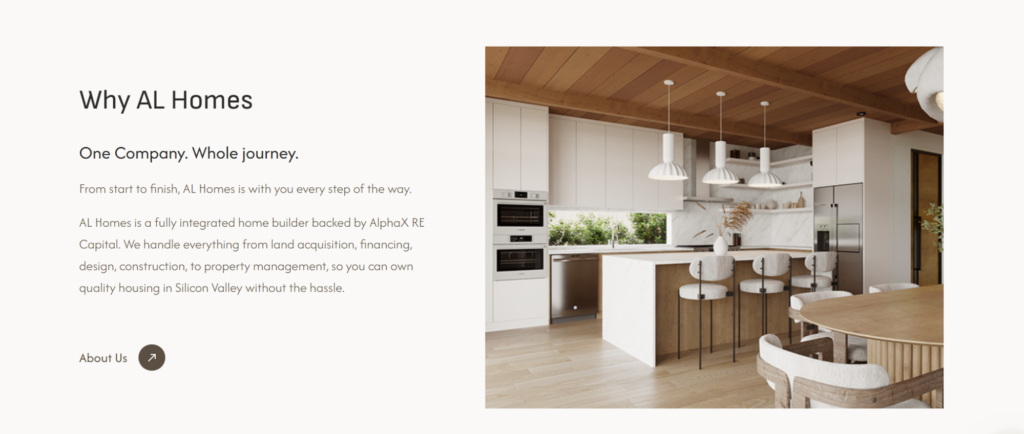
Every builder acknowledges the friction points in new construction: multiple vendors, permitting delays, and timeline uncertainty. AL Homes removes them by design.
- One team handles land acquisition, financing, design, construction, and post-move support, with no coordination needed between separate contractors
- Local Bay Area subcontractors exclusively, which matters in cities like San Jose, Palo Alto, Mountain View, and Sunnyvale, where permitting, soil conditions, and seismic requirements all vary
- The Trade Your Home program helps buyers move once instead of twice, using their current home’s value toward a new AL Home
- Transparent pricing from day one, with no mid-build cost surprises
Explore AL Homes communities or book a free consultation to see how AL Homes can simplify your move.
Conclusion
Sticker price isn’t the full story in the Bay Area. Once you factor in maintenance, insurance, and energy costs, new construction often competes better than it looks upfront.
Resale inventory sits near historic lows, and much of the existing stock needs major repairs soon. New construction costs more upfront but comes with predictable maintenance, lower utility bills, and a full warranty.
For buyers who already own land, the math favors building even more.
New construction isn’t the premium choice anymore; it’s often the smarter one.
Book a free consultation with AL Homes to see what building new could look like for you.
FAQs: New Construction vs Resale
Is new construction more expensive than resale in the Bay Area?
Upfront, often yes. But factoring in maintenance, insurance, and energy costs, new construction frequently costs less over time.
What are the hidden costs of buying a resale home in California?
Roof, HVAC, and water heater replacements, rising insurance premiums, and transaction costs of 8 to 10% if you’re also selling.
Is it better to buy new or used home in 2026?
It depends on your timeline and budget. New construction offers lower long-term costs; resale offers faster move-in and lower upfront price.
How long does it take to buy a new construction home in the Bay Area?
Timelines vary by community and construction stage. Move-in ready homes are fastest; custom builds take longer.
Does new construction hold its value better than resale?
Yes. New homes typically sell at a premium over comparable resale homes, especially in supply-constrained markets like Silicon Valley.