Buying a new construction home in the Bay Area raises one big question: what will the property tax bill actually look like? California caps the base rate, but new construction often carries extra layers that resale homes nearby do not.
Many Silicon Valley buyers get surprised by a supplemental tax bill months after closing. This guide breaks down what drives your bill higher and what you can do about it.
- How Proposition 13 resets your tax base on new construction
- What a supplemental tax bill is and when it arrives
- How Mello-Roos and CFD taxes work in Bay Area subdivisions
- Real worked examples using Santa Clara and San Mateo rates
Why New Construction Homes Have Different Property Taxes
New construction homes in California often carry a higher tax bill than older homes on the same street. Every property gets reassessed the moment it changes hands or finishes construction, and that reset locks in today’s market value as the new baseline.
Older resale homes frequently sit on a much lower assessed value, sometimes decades old. A new build starts fresh at current prices, which is usually far higher.
How Proposition 13 works for new construction (base year reset)
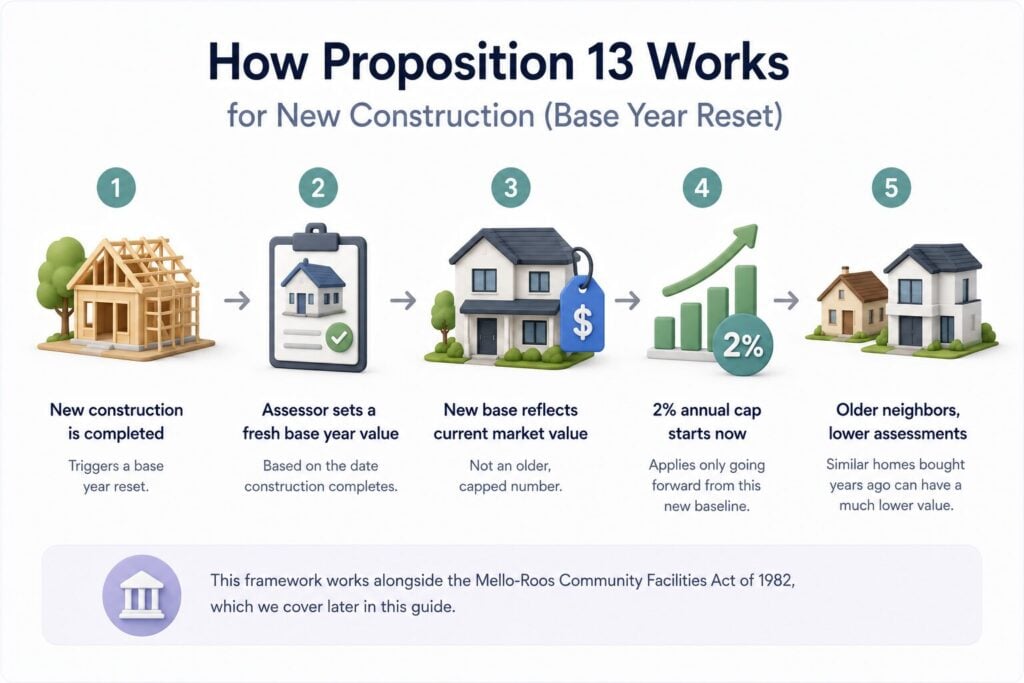
According to Santa Clara County, Proposition 13 caps California’s general property tax at 1% of assessed value and limits annual increases to 2% until a change in ownership or completion of new construction resets the base year value.
New construction breaks that pattern immediately:
- According to San Bernardino County Assessor, the assessor sets a fresh base year value for the improvements as of the date construction completes
- That new base reflects current market value, not an older, capped number
- The 2% annual cap only starts applying going forward, from this new baseline
- Neighboring homes bought years ago can carry a far lower assessed value for a similar property
This framework sits alongside the Mello-Roos Community Facilities Act of 1982, which we cover later in this guide.
If you’re also weighing the cost side of building versus buying, our guide on how much it costs to build a house in California breaks down current per-square-foot pricing.
Why new builds get reassessed at full market value
For a brand-new home, there’s no existing structure to preserve. The entire improvement counts as new construction, so it gets assessed at full market value from day one.
- According to Santa Clara County, land value typically stays unchanged during a new construction event, unless the land itself also changed ownership
- For a finished new home bought directly from a builder, land and structure usually reset together at sale
- The assessed value becomes your starting point for future 2% annual increases
For context on new construction pricing versus resale, see Should I Buy or Build in the Bay Area Right Now?
How Property Taxes Are Calculated on a New Construction Home
Once your new home’s base year value is set, the tax bill follows a simple formula. The tricky part is knowing which local add-ons apply to your address.
The basic formula (assessed value × ~1% base rate + local add-ons)
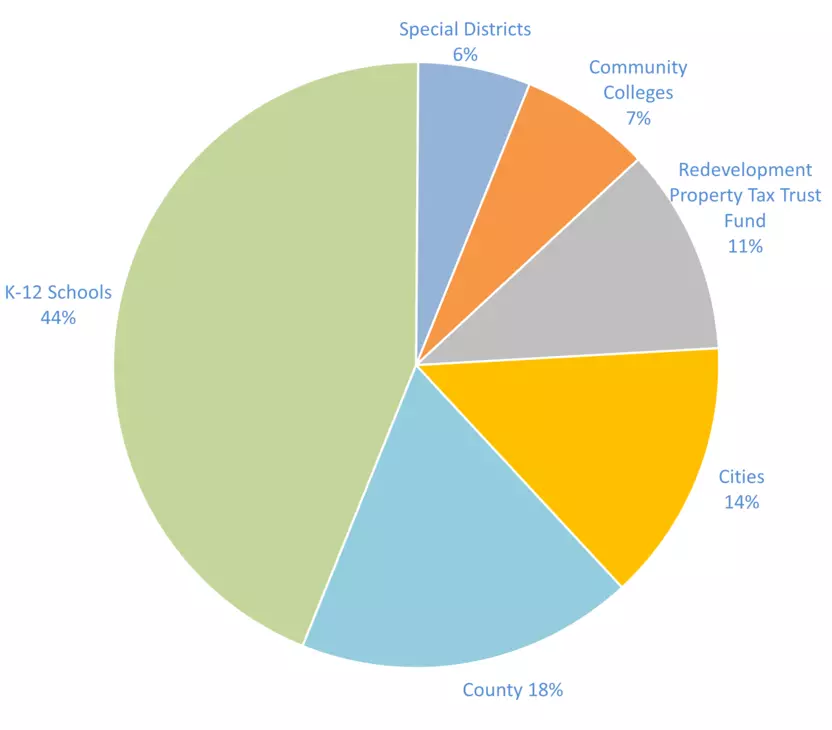
Source: Santa Clara County
Property taxes are capped at 1% of assessed value, plus additional voter-approved taxes that vary by tax rate area. Local add-ons typically stack on top:
- Voter-approved bond measures for schools or infrastructure
- Special assessments tied to specific districts
- Mello-Roos or CFD special taxes, common in newer subdivisions
Your exact rate depends on your Tax Rate Area, a code the county assigns to your specific neighborhood. Confirm it with the assessor, or ask your new home community team what applies at a specific address.
Worked example using Bay Area numbers (Santa Clara and San Mateo)
Here’s how a $1.5 million new construction home breaks down:
- Santa Clara County: Effective rate for 2025-26 runs close to 1.25%, or roughly $18,750 per year before Mello-Roos.
- San Mateo County: According to the County of San Mateo Controller’s Office, the county collected $3.3 billion from the 1% general tax in FY 2024-25, plus $438 million in special charges and $399 million in bond debt service. Rates vary by Tax Rate Area, so confirm yours in the county’s Property Tax Rate Book before budgeting.
These are estimates only. Your actual bill depends on your Tax Rate Area and whether your community carries a Mello-Roos assessment.
The Supplemental Tax Bill: What Bay Area Buyers Should Expect
A supplemental tax bill catches many new construction buyers off guard. It’s a normal part of buying a newly built home in California, and it usually means you owe more before your first full year is up.
Why it’s separate from your regular annual bill
Your regular annual bill is based on your home’s assessed value as of January 1, the lien date. New construction bought partway through the year doesn’t reflect that finished value yet.
According to the California State Board of Equalization, the assessor determines the property’s new market value upon change of ownership or new construction, then subtracts the prior assessed value to calculate the net supplemental value.
That supplemental bill is prorated based on the months remaining in the fiscal year, which runs from July 1 through June 30.
Timing: when it arrives and how it’s prorated
According to the same source, a supplemental event between June 1 and December 31 triggers one supplemental bill, covering the period from the first day of the following month through June 30.
A supplemental event between January 1 and May 31 triggers two separate supplemental bills instead, one for the current fiscal year and one for the next.
- A home completed in September owes roughly nine months of supplemental tax in one bill
- A home completed in March triggers two bills: a short one for the current fiscal year, and a full one starting July 1
- The homeowners’ exemption applies to supplemental assessments too, as long as you file within the required window
Lenders don’t always collect an estimate for this in escrow, so budget for it separately from your regular annual bill. See our Home Buying Process in California guide for more on what to expect financially.
Mello-Roos and CFD Special Taxes in New Bay Area Communities
Mello-Roos is one of the biggest surprises for new construction buyers in Silicon Valley. It’s a separate charge from your regular property tax bill.
What Mello-Roos is and why it shows up in new subdivisions
According to the City of Davis, the Mello-Roos Act of 1982 followed funding limits created by Proposition 13. It gives cities and counties a way to finance roads, sewers, and other public facilities in new developments.
Older neighborhoods already have this infrastructure in place. Mello-Roos mostly appears in newer communities where it still needs to be built.
How to check before you buy
Ask your builder for the exact Mello-Roos or CFD amount in writing before you make an offer. You can also look up the parcel directly through the Santa Clara County Assessor’s property search tool to confirm any special tax district.
Want help understanding what applies to a specific AL Homes community? Book a free consultation, and we’ll walk you through the numbers together.
What Determines Your Bay Area New Construction Tax Bill
Not every new construction home in the Bay Area gets taxed the same way. Even two homes priced identically can end up with very different annual bills, depending on where they sit and how they’re built.
County and local tax rate differences
Every county layers its own bonds and special assessments on top of the 1% base rate. These additional taxes vary by tax rate area and are set by voters in each community. A home in one school district can carry a different bond obligation than a home just blocks away in another district.
Home size, lot, and finish level
According to the Legislative Analyst’s Office, assessed value for most California property is based on its purchase price. Larger homes and premium finishes typically mean a higher purchase price, and a higher assessed value from day one.
Land value vs. improvement value
Your assessed value combines two figures: the land value and the improvement value, both listed separately on your property tax bill. The 1% rate and any voter-approved debt rates apply to that combined total, so a higher value in either category raises your overall bill.
Exemptions and Ways to Reduce Your Tax Burden
You have a few legitimate ways to lower your property tax bill on a new construction home.
Homeowners’ exemption ($7,000 off assessed value)
Homeowners can claim a $7,000 exemption from their assessed value each year. This applies to supplemental assessments too, as long as you file within the required window.
Solar exclusions for new construction
New solar energy systems are excluded from property tax reassessment. This exclusion applies specifically to new construction, unlike some other exclusions that only cover retrofits to existing homes.
Ask your builder which exclusions apply to your new home before you finalize your purchase.
Budgeting for Property Taxes When Buying New Construction
Your first property tax estimate can look smaller than what you’ll actually pay. Knowing why helps you avoid a shortfall in year one.
Why your first-year estimate may be low
An early quote often reflects the land’s prior value, before your home was built. Once your supplemental assessment lands, your bill catches up to the home’s true value. Add any Mello-Roos tax, and your real cost can run well above that first estimate.
- Ask for the Tax Rate Area and Mello-Roos amount before you buy
- Set aside funds for a supplemental bill in your first year
How AL Homes helps buyers plan ahead

AL Homes is a vertically integrated homebuilder backed by AlphaX RE Capital, managing land, financing, design, and construction under one roof. Your sales team can help you understand the tax rate, Mello-Roos amount, and supplemental bill timeline for your specific home before you sign anything.
Ready to see current pricing and tax details for a specific home? Find your new home and connect with our team.
Conclusion
New construction property taxes in California follow clear rules, even when the numbers feel surprising at first. Proposition 13 resets your tax base to market value, a supplemental bill closes the gap in year one, and Mello-Roos can add real ongoing cost.
Knowing your Tax Rate Area, supplemental bill estimate, and Mello-Roos amount before you buy keeps your budget on track. Book a free consultation with AL Homes to talk through what a new build actually costs, taxes included.
FAQs: Property Taxes on New Construction Homes in California
How is property tax calculated when building a new home in California?
Your assessed value is set at market value once construction completes, then multiplied by the 1% base rate plus local voter-approved add-ons like Mello-Roos.
Is new construction taxable in California?
Yes. New construction triggers reassessment at full market value, and typically generates a supplemental tax bill on top of your regular annual property tax.
Are property taxes going up in California in 2026?
Annual increases are capped at 2% under Proposition 13, though new construction or a change in ownership resets a property’s base year value to current market value.
What is the $7,000 property tax exemption in California?
Homeowners can claim a $7,000 exemption from their assessed value each year on their primary residence.