A newly built home can look ready while still having issues that deserve attention before you move in. A new construction home inspection helps you identify concerns and discuss repairs with your builder.
For Bay Area buyers, timing matters. Some inspections happen before drywall covers the framing, while others take place before closing or during your first year.
This guide covers:
- How city inspections differ from hiring your own inspector
- When to schedule inspections during construction and after moving in
- What to check, how to plan costs, and how to document repair requests
Do You Need A Home Inspection On New Construction?
Yes. City inspections check code compliance, while your own inspector provides an independent assessment of the home’s condition.
The American Society of Home Inspectors (ASHI) recommends construction-phase inspections and a final inspection before closing. A later warranty inspection provides another opportunity to identify concerns.
Consider these three checkpoints:
- Pre-drywall inspection: After framing and rough-in systems are installed, ideally before insulation conceals components and before drywall installation.
- Pre-closing inspection: Near completion, leaving enough time for the builder to address necessary repairs before closing.
- 11-month warranty inspection: Around month 10 or 11, allowing time to submit concerns before applicable one-year warranty deadlines.
Coordinate access with your builder early, and check your written warranty for coverage and claim deadlines.
City Code Inspections Vs. Hiring Your Own Inspector
Inspection responsibilities depend on who commissions the review and which stage of construction the home has reached.
What city building inspectors check
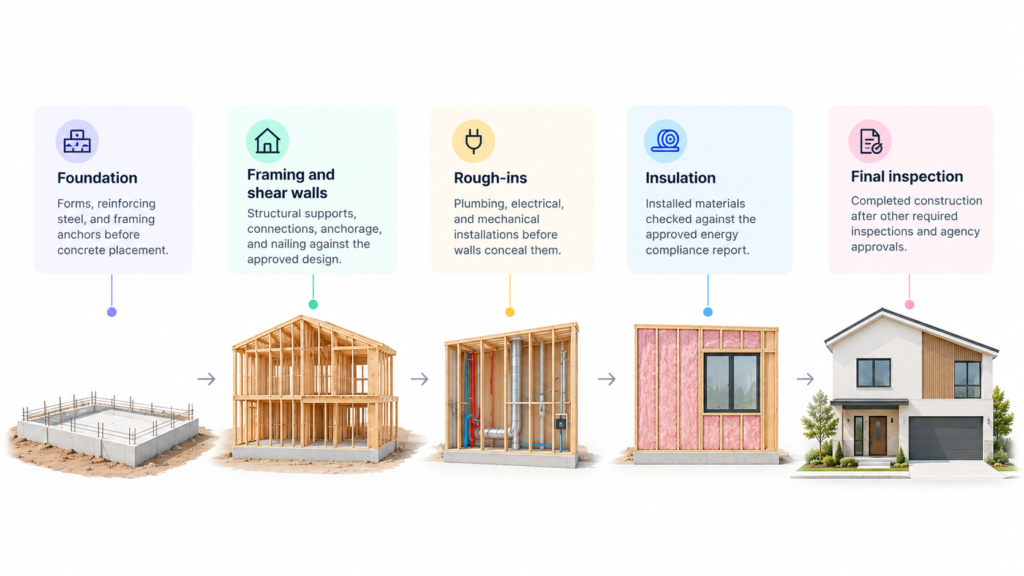
City inspectors review construction at stages defined by the permit and approved plans. Cupertino’s residential inspection procedures outline these typical checks:
- Foundation: Forms, reinforcing steel, and framing anchors before concrete placement.
- Framing and shear walls: Structural supports, connections, anchorage, and nailing against the approved design.
- Rough-ins: Plumbing, electrical, and mechanical installations before walls conceal them.
- Insulation: Installed materials checked against the approved energy compliance report.
- Final inspection: Completed construction after other required inspections and agency approvals.
Requirements vary by project and jurisdiction. Some foundations also require documentation from structural or soils engineers. Our guide to Bay Area soil and seismic requirements explains how local conditions affect construction.
Energy compliance may also require separate third-party verification. California’s 2026 energy guidance explains the Energy Code Compliance program, which replaced HERS compliance verification. The project’s compliance documents identify required testing.
What a private inspector adds
A private inspector gives you a written assessment to discuss with the builder. The California Real Estate Inspection Association (CREIA) defines this as a visual, noninvasive review of accessible systems and components.
The report identifies material defects, including safety hazards and systems that don’t function properly. CREIA’s standards exclude cosmetic conditions, so confirm any additional finish review when booking.
When choosing an inspector, ask for:
- New construction experience: Familiarity with construction phases and the inspection you need.
- A sample report: Clear photos, specific findings, and recommendations you can share with your builder.
- Training and credentials: Ask about relevant training and verify any certification claimed through ASHI or CREIA.
Agree on the inspection’s scope beforehand, including access limitations and any follow-up visit to review repairs.
The Pre-Drywall Inspection
A pre-drywall inspection examines visible framing connections, openings for pipes and wiring, and water protection details. Insulation can conceal some components, so agree on timing with your inspector before the builder closes the walls. InterNACHI’s guidance explains how insulation affects visibility.
Use this pre-drywall inspection checklist to discuss the scope with your inspector:
- Framing and connections: Visible framing, supports, connectors, and notches or holes made for pipes and wiring.
- Plumbing and electrical: Accessible piping, wiring, electrical boxes, and protection around penetrations.
- Heating and cooling: Installed ductwork, routing, supports, and visible equipment.
- Water protection: Accessible window and door flashing, waterproofing, and exterior wall coverings.
- Insulation: Installation condition where present and visible.
Ask your builder to confirm which findings will be corrected and when. Arrange any necessary reinspection before those areas are covered.
The Final Inspection And Blue Tape Walkthrough
Near completion, three separate reviews serve different purposes:
- City final inspection: Checks completed work for permit compliance and supports the required occupancy approval.
- Private inspection: Evaluates accessible systems and components for material defects.
- Builder walkthrough: Lets you review the finished home, learn its features, and identify outstanding fixes.
Some builders use removable blue tape to mark items needing attention. Record agreed corrections on a written punch list.
Schedule your private inspection before this walkthrough when possible, so you can discuss its findings together. ASHI recommends leaving enough time before closing for necessary repairs.
Use this walkthrough checklist alongside your professional inspection report:
- Paint and drywall: Look for unfinished areas, surface damage, and visible cracks.
- Doors and windows: Check operation, locks, glass, and weatherstripping.
- Cabinets and flooring: Check drawer alignment, hardware, damaged surfaces, and incomplete installation.
- Appliances and fixtures: Confirm appliances operate, faucets run, drains clear, and visible connections remain dry.
- Exterior: Review grading, drainage, gutters, and downspouts for unfinished work or water-management concerns.
Before signing the walkthrough paperwork, review the punch list and request written completion dates for outstanding items.
Also ask your builder to demonstrate safety devices and locate utility shutoffs. Use our new homeowner’s safety checklist to prepare for move-in.
The 11-Month Warranty Inspection
An 11-month warranty inspection checks how your home has performed after months of everyday use. Schedule around month 10 or 11, leaving time to submit concerns before applicable first-year deadlines.
Ask the inspector to evaluate accessible areas for:
- Interior changes: Cracks, sticking doors, and gaps in caulking or grout.
- Water-related concerns: Leaks, moisture staining, and drainage problems.
- Roof and attic conditions: Visible flashing, ventilation, and insulation issues.
- System performance: Problems with heating, cooling, plumbing, and electrical components.
California Civil Code §900 requires a minimum one-year written limited warranty covering specified fit-and-finish components. These include cabinets, flooring, countertops, paint, and trim. Other construction-defect protections have different deadlines, so the first anniversary doesn’t end every protection.
Submit your report with a written warranty request using the builder’s stated process, and retain confirmation of delivery. Report active leaks or safety concerns promptly instead of waiting for this inspection.
For applicable construction-defect claims, California’s SB 800 establishes procedures before litigation. The Contractors State License Board explains that builders generally receive an opportunity to inspect and attempt repairs first.
How Much Do New Construction Inspections Cost?
New construction home inspection costs vary by location, home size, and inspection scope. These Northern California examples provide a starting budget:
- Pre-drywall: $350-$550. A Silicon Valley buyer’s guide publishes this local estimate. Confirm pricing directly with your inspector.
- Pre-closing: approximately $450-$850. The same Silicon Valley guide estimates this range for standard inspections of homes up to 3,500 square feet.
- 11-month warranty: Good Life Inspections in Sacramento estimates $300-$600. Bay Area Home Inspections advertises townhome packages from $585. Its single-family package, including roof and exterior inspection, starts at $735.
These are published estimates and advertised prices, not regional averages. Larger homes, specialist testing, and return visits can increase your total.
Inspection fees are a small part of a Bay Area home purchase, but you still need to budget for multiple visits. Request an itemized quote and ask about package pricing before booking.
What To Expect When You Build With AL Homes
AL Homes manages land acquisition, design, construction, and post-closing support through one integrated team. It works with Bay Area subcontractors familiar with local codes, soil conditions, and construction standards.
Its construction process includes internal and independent inspections, followed by a buyer walkthrough covering the home’s key functions. After move-in, the team remains available for questions and service requests. Warranty terms vary by project, so review your home’s written coverage before purchasing.
Ask the team how to coordinate your private inspector’s visits and where to submit walkthrough items or warranty requests.
Book a free consultation to discuss the inspection process for the home you’re considering.
Keep Inspection Findings On Track
Each inspection should lead to a clear next step. Track outstanding items, agreed repairs, and warranty requests in one place. Keep completion records to distinguish resolved concerns from issues that need further attention.
When comparing builders, ask how they accommodate independent inspections and handle outstanding concerns.
Browse available AL Homes to explore homes and communities across the Bay Area.
FAQs: New Construction Home Inspections
Should I get a home inspection on a new build?
Yes. An independent inspection can identify accessible defects in a newly built home. It complements city inspections and gives you findings to discuss with your builder.
When should you get a home inspection on new construction?
Schedule after framing and rough-ins, before drywall; near completion, before closing; and around month 10 or 11. Coordinate access with your builder and check warranty deadlines.
Is a home inspection required for new construction?
Required municipal inspections are part of the permitting process. A separate buyer-hired inspection is generally optional. Check your purchase agreement and lender requirements.
What should you look for in a new construction home inspection?
Ask your inspector to assess accessible structural components, roofing, drainage, plumbing, electrical, and HVAC systems. Review cosmetic finishes separately during the builder walkthrough.