
- Essential safety and security tasks before move-in
- Earthquake and wildfire preparation for Bay Area homeowners
- Ongoing checks to complete during your first 30 days
Your New Homeowner Safety Checklist: What To Set Up Before You Move In
Resale home checklists often cover worn wiring, outdated materials, mold, and existing damage. AL Homes properties comply with current California building, energy, seismic, and local codes.Test and place smoke and CO detectors
Test every smoke and carbon monoxide detector before your first night in the home. Working smoke alarms reduce the risk of dying in half, according to the National Fire Protection Association. Under the California Residential Code, smoke alarms must be installed inside every bedroom, outside each sleeping area, and on every level.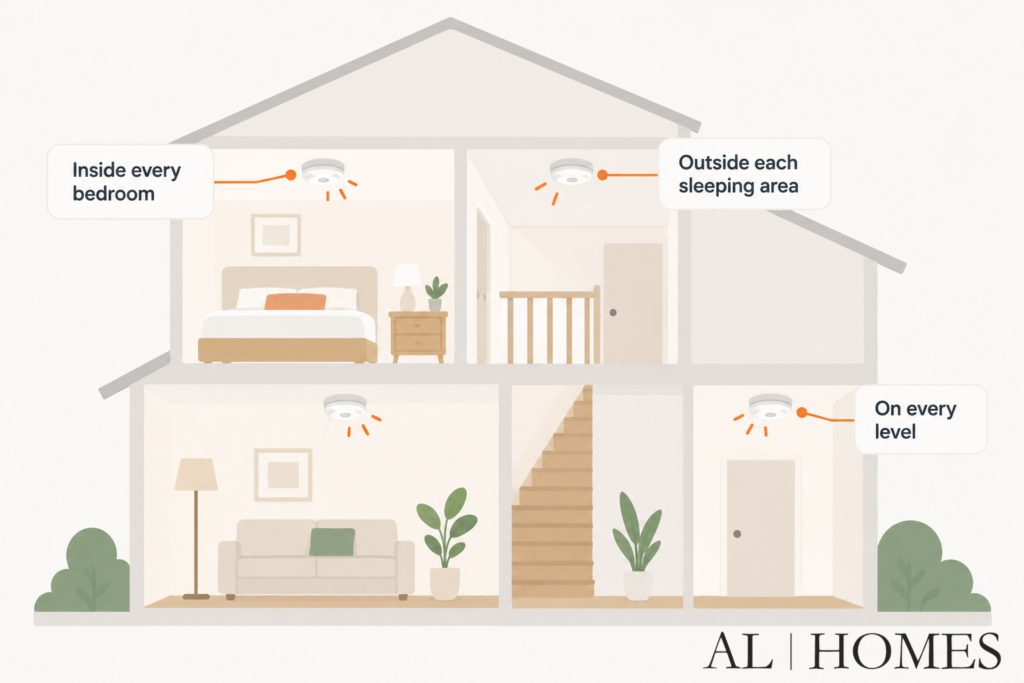
- Press the test button on every alarm
- Confirm interconnected alarms sound together
- Check each device’s manufacture and replacement dates
- Keep alarms clear of dust, paint, and decorations
- Follow the manufacturer’s placement instructions
Locate and label the gas shutoff valve
Find the main gas shutoff valve before an emergency occurs. It is usually outside near the gas meter, but its location may vary. Ask your representative to identify it during the final walkthrough. Then:- Label the valve clearly
- Show every adult where it is
- Keep the correct shutoff tool nearby
- Make sure landscaping and stored items do not block access
Know your new home’s systems and warranty coverage
Locate the electrical panel, main water shutoff, HVAC equipment, and other essential systems. Label unfamiliar switches and breakers while you can easily confirm their functions. Keep manuals, inspection records, warranty documents, and service contacts together. Most builders offer tiered coverage. AL Homes’ Builder Limited Warranty, for example, includes:- One year of fit-and-finish coverage
- Two years of systems coverage
- Ten years of structural coverage
Earthquake Prep For New Homeowners
A code-compliant home still needs household preparation. Start by securing items that could fall or block an exit. The U.S. Geological Survey estimates a 72% chance of a magnitude 6.7 or greater Bay Area earthquake before 2043.Anchor furniture and heavy appliances
Attach tall furniture to wall studs using approved brackets or straps. Prioritize items near beds, seating areas, and exits. Secure:- Bookshelves, cabinets, and dressers
- Televisions, mirrors, and large artwork
- Refrigerators and freestanding ranges
- Water heaters with seismic straps
Know your gas shutoff procedure
As covered earlier, every adult should know where the valve and wrench are located. After an earthquake, only close the valve if you notice signs of a leak. If you smell gas, hear hissing, or see line damage:- Avoid anything that could create a spark.
- Leave the home immediately.
- Call 911 and PG&E from a safe location.
- Shut off the gas only if you can approach safely.
- Wait for a qualified professional to restore service.
Understand your home’s seismic safeguards
New construction includes protections that older homes may lack. These can include site-specific foundation design, current structural standards, and modern connections between the home and foundation. AL Homes manages land acquisition, geotechnical review, and foundation engineering through one integrated team. Soil conditions and seismic risks inform the foundation design before construction begins. You can ask for documentation showing:- The lot’s geotechnical evaluation
- The site-specific foundation recommendations
- The property’s mapped seismic or liquefaction zone
- The home’s structural warranty coverage
Build a basic earthquake kit
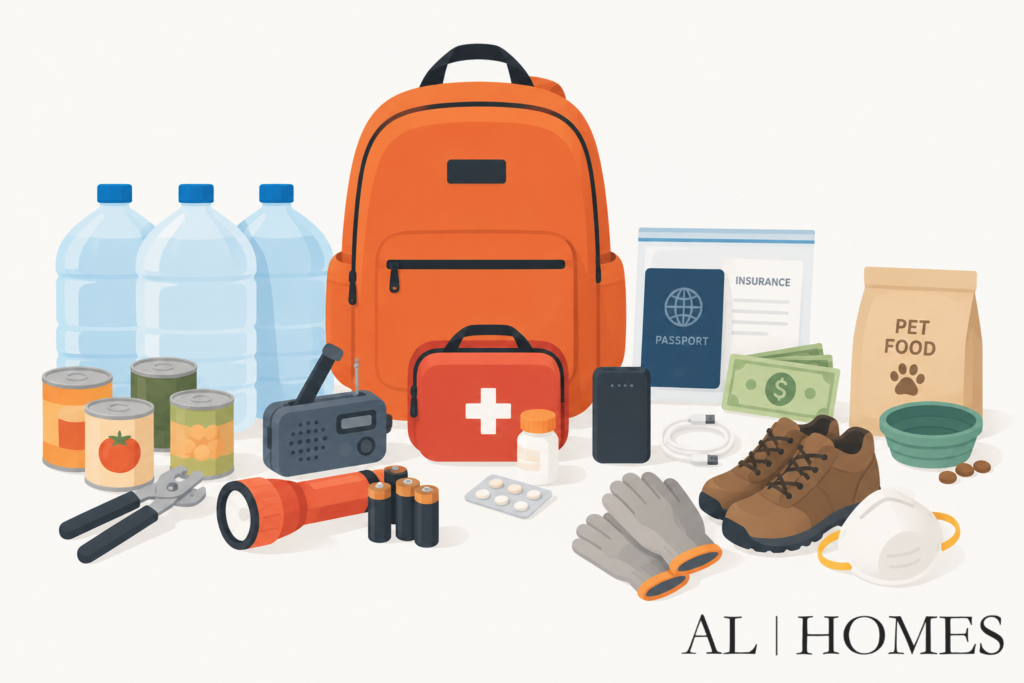
Prepare enough supplies for every household member for several days. Store the kit in an accessible location away from heavy objects.
Include:
- One gallon of water per person per day
- Nonperishable food and a manual can opener
- Flashlights, batteries, and a hand-crank radio
- First-aid supplies and essential medications
- Phone chargers and portable power banks
- Copies of identification and insurance documents
- Cash, sturdy shoes, gloves, and dust masks
- Food, water, and supplies for pets
Use the FEMA emergency supply checklist to customize the kit for your household.
Some emergencies require leaving instead of sheltering at home. Your wildfire plan should include portable supplies and a clear evacuation strategy.
Wildfire Readiness Checklist
Wildfire preparation starts before smoke or evacuation warnings appear. Maintain the property, prepare portable supplies, and know where to find local alerts.
Create defensible space around the home
Defensible space creates a buffer that slows fire and reduces exposure to embers, flames, and heat. CAL FIRE recommends organizing defensible space into three zones:
- Zone 0, 0 to 5 feet: Use gravel, pavers, or concrete instead of combustible mulch. Remove dead vegetation and debris from roofs, gutters, decks, porches, and under the home. Move firewood and lumber to Zone 2.
- Zone 1, 5 to 30 feet: Remove dead plants, grass, leaves, and pine needles. Trim trees and separate vegetation from patio furniture, wood piles, and other combustible items.
- Zone 2, 30 to 100 feet: Keep grass at four inches or shorter. Create horizontal and vertical spacing between plants. Clear around wood piles, outbuildings, and propane tanks.
Local agencies may apply stricter rules. Check with your fire department or fire protection district before planning landscaping changes.
Pack a wildfire go-bag
Your earthquake kit supports several days at home. A wildfire go-bag should help you leave quickly and travel safely.
Pack portable versions of essential supplies, then add evacuation-specific items:
- A map showing at least two evacuation routes
- Copies of identification, insurance records, and prescriptions
- Spare car keys, cash, and payment cards
- A change of clothes, sturdy shoes, and eyeglasses
- Phone chargers and portable power banks
- Pet carriers, leashes, and veterinary records
Keep each bag light enough to carry. Store food and water in a wheeled container near your vehicle.
Use the CAL FIRE go-bag checklist to review your supplies before fire season.
Sign up for local emergency alerts
Register for your county’s emergency alert system before fire season. Santa Clara County residents can use AlertSCC for wildfire warnings and evacuation notices.
Find your evacuation zone through Genasys Protect. Save the zone name and plan two routes in case one becomes blocked.
Learn more about fire risks and building requirements in our guide to rebuilding after California wildfires.
See AL Homes’ resilient building standards in person. Schedule a tour.
Home Security Setup For A New Build
A new homeowner home security checklist should cover every entry point before your first night.
Change locks and garage or gate codes
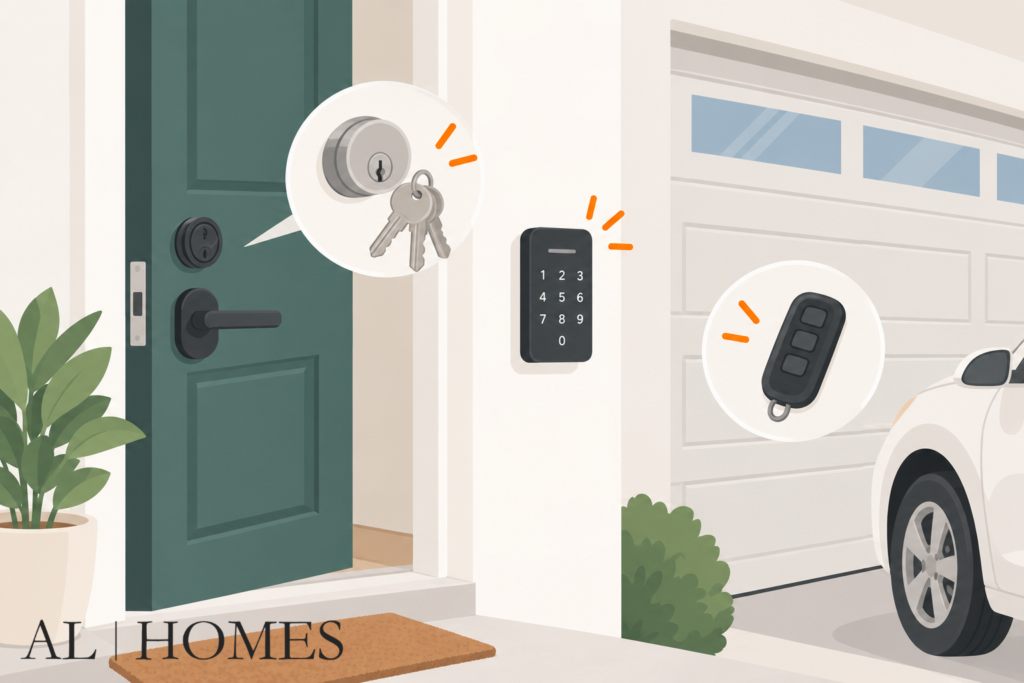
A never-occupied home may still have keys or codes shared during construction, inspections, and showings.
Before moving in:
- Rekey exterior doors or replace temporary locks
- Reset garage, gate, and keypad codes
- Remove old users from smart-lock accounts
- Confirm spare keys are stored securely
Test each door after making changes and give access only to trusted household members.
Install exterior lighting and cameras
Prioritize the front door, driveway, garage, side gates, and rear entrance. Use motion-activated lighting to improve visibility without keeping every fixture on overnight.
Position cameras to cover entry points without recording neighboring properties. Enable alerts, use strong passwords, and activate two-factor authentication for connected security accounts.
Secure windows, sliding doors, and side access
Check every window and sliding door for smooth locking. Add secondary locks or track pins where extra protection is needed.
Do not overlook side gates, garage service doors, and backyard entrances. Lock gates from inside and keep shrubs trimmed so these access points remain visible. Avoid hiding spare keys near doors or outdoor fixtures.
First 30 Days: Ongoing Safety Habits
Turn the one-time checks from your move-in checklist into simple routines.
Test detectors monthly
After your initial move-in test, check every smoke and carbon monoxide alarm monthly. Set a recurring phone reminder and record each alarm’s replacement date.
Replace batteries and entire units according to the manufacturer’s instructions. Never ignore repeated chirping or disable an alarm.
Walk the property for hazards each season
Inspect the property before fire season and after major winter storms. Look for:
- Dead vegetation or debris near the home
- Blocked gutters, drains, or vents
- Loose branches and damaged fencing
- Standing water or soil erosion
- Cracks or damage around exterior utilities
Photograph concerns and report possible construction issues through the AL Homes warranty process.
Save emergency and home service contacts
Store these numbers in your phone and keep a printed copy with your emergency supplies:
- Emergency services: 911
- PG&E emergency line: 1-800-743-5000
- AL Homes NorCal office: 855-254-6631
- HOA or property manager: Add your community’s number
- Home insurance provider: Add your policy contact
Update this list after changing providers. Label the electrical panel and utility shutoffs with the related contact details.
For more local ownership information, read New Homes in San Jose, CA: What Buyers Need to Know.
Start Your New Homeownership Journey Safely
A new-construction home starts with modern systems, current code compliance, and fewer age-related concerns. It still needs a deliberate safety setup from the homeowner.
AL Homes manages design, engineering, construction, inspections, and warranty support through one integrated process. Site-specific seismic planning and code-compliant systems give buyers a strong foundation from move-in day.
Complete this checklist, keep emergency supplies accessible, and review your plans each season. These simple habits help protect your household and investment over time.
Ready to find your next home? View available AL Homes properties.
FAQs: New Homeowner Safety Checklist
What safety items should I set up first in a new home?
Test smoke and CO alarms, locate utility shutoffs, change access codes, secure entry points, and save emergency contacts. Complete these tasks before or immediately after moving in.
How do I prepare a new California home for earthquakes?
Anchor tall furniture, secure heavy appliances, locate the gas shutoff, and prepare emergency supplies. Learn your household’s safe meeting point and communication plan.
What should be in a wildfire go-bag?
Pack evacuation routes, medications, identification, insurance records, spare keys, cash, clothes, chargers, and pet supplies. Store food and water nearby for quick loading.
Where should smoke and carbon monoxide detectors be placed?
Smoke alarms belong inside bedrooms, outside sleeping areas, and on every level. CO alarms belong outside sleeping areas and on every occupiable level in homes requiring them.
Does a new AL Homes property come with built-in safety features?
Yes. AL Homes properties follow current California building, energy, seismic, and local codes. Safety features and systems vary by property, so confirm the details during your walkthrough.