Buying a condo vs. a townhouse in the Bay Area means comparing more than asking prices. HOA fees, repair responsibilities, and insurance can all affect your budget after you move in.
The right choice also depends on how much space you need and how much upkeep you want to handle. This guide covers:- Purchase prices and ongoing ownership costs
- Maintenance, insurance, and resale considerations
- How to choose a home that fits your plans
Condo vs. Townhouse: What’s the Difference?
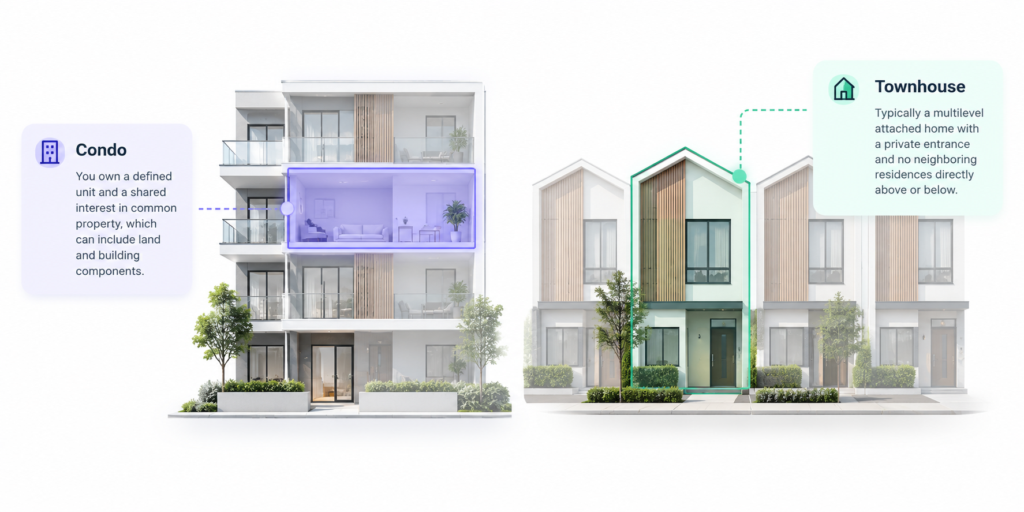
The main distinction is that a condo describes ownership, while a townhouse describes the home’s physical design.
- Condo: You own a defined unit and a shared interest in common property, which can include land and building components. The recorded condominium plan establishes your unit’s boundaries.
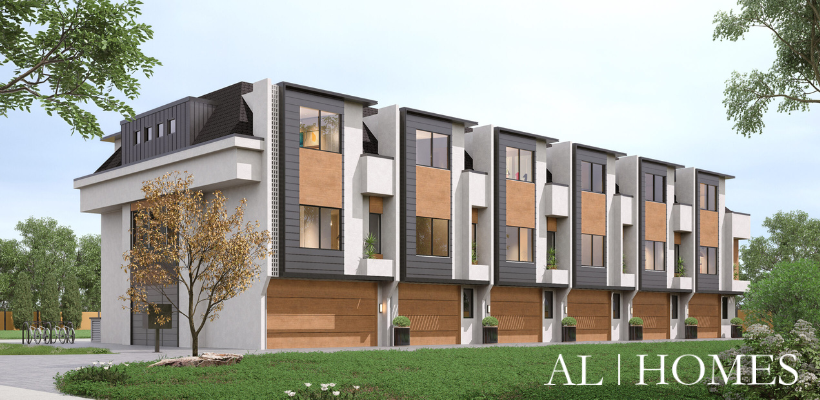
- Townhouse: Typically, a multilevel attached home with a private entrance and no neighboring residences directly above or below. “Townhouse” and “townhome” describe the same architectural style.
Why a townhouse can legally be a condo in California
California’s Davis-Stirling Act does not define “townhouse” as a separate ownership category. The California Department of Real Estate explains that townhouse-style developments are commonly condominiums or planned developments.
To understand a property’s ownership boundaries and community rules, review:
- Recorded condominium plan: Defines the unit you own in a condominium project.
- Recorded tract or parcel map: Shows the individual lot in a planned development.
- Covenants, Conditions, and Restrictions (CC&Rs) and association bylaws: CC&Rs explain property rights and use restrictions. Bylaws describe how the association operates.
The California Land Title Association identifies these documents when explaining condominium and planned-development ownership. Check them before assuming a private entrance or yard comes with individual land ownership.
What Each Costs To Buy In The Bay Area
Condos can offer a lower entry price, but compare similar homes within the same city to understand the difference.
For example, Homes.com’s Santa Clara price table lists these medians when checked in October 2026:
- Two-bedroom condos: $750,000
- Two-bedroom townhouses: $1,318,000
These city-level figures provide context, not a valuation for any particular home. Even with matching bedroom counts, differences in square footage, age, condition, and location remain.
Property taxes also affect affordability. California’s base property tax rate is 1% of assessed value, plus voter-approved bond charges. Other assessments may apply. The Santa Clara County Assessor explains the basic rate and bond charges.
For more detail, read our California new-construction property tax guide.
Before deciding which is cheaper, compare mortgage payments, taxes, HOA dues, insurance, and maintenance together.
HOA Fees: What You Pay And What It Covers
Stealpad’s October 2026 data reports a typical condo HOA range of $365-$717 monthly across eight Bay Area cities. Its sample covers San Francisco and parts of the East Bay, excluding Santa Clara County. Use this as context when comparing individual communities.
Look beyond the monthly amount to understand what you’re paying for:
- Operating expenses: Check which shared services, utilities, amenities, and management costs the dues cover.
- Reserve contributions: Review how the association saves for major repairs and replacements.
- Association insurance: Identify what the master policy covers before budgeting for your separate owner policy.
Also check rental restrictions, pet rules, parking limits, and approvals for exterior changes. The DRE’s guidance on common interest developments highlights these rules because they affect how you use your home.
Compare dues alongside your separate repair obligations to understand the full cost. Confirm current fees and rules with the HOA, as both can change.
SB 326 and special assessments
Senate Bill 326 (SB 326) introduced California’s condominium balcony inspection requirements, now found in Civil Code Section 5551.
The initial deadline was January 1, 2025, with inspections required at least every nine years afterward. For buildings with permit applications submitted from January 1, 2020, the first inspection follows a different schedule. It must occur within six years after the certificate of occupancy is issued.
Required repairs could lead to a special assessment, an additional charge beyond regular dues, if HOA funds fall short. Townhouse-style condos can also qualify for inspections, so their design alone does not eliminate this potential expense.
HOA documents to review before you buy
Before committing, review the documents that reveal upcoming expenses and the association’s financial position:
- Budget and reserve study: Compare reserve balances with projected repair costs, funding plans, and deferred work.
- Assessment disclosures: Check current special assessments, approved increases, and anticipated charges for major repairs.
- Insurance summary: Review coverage limits and deductibles, then identify gaps with your insurance agent.
- Board minutes and inspection reports: Look for repair discussions, unresolved issues, and findings from any required balcony inspections.
- CC&Rs: Confirm maintenance obligations and restrictions that could affect your plans.
California’s annual budget disclosure requirements explain the financial and insurance information associations must provide.
Maintenance: Who Fixes What
Maintenance responsibilities affect both your workload and the money you need beyond HOA dues.
- Condo owners: Generally maintain their separate unit, while the HOA maintains common areas. Civil Code Section 4775 allows the declaration to assign responsibilities differently.
- Townhouse owners: May maintain their roof, exterior, and private yard, depending on ownership boundaries and governing documents. The California Department of Real Estate explains how exterior and roofing obligations vary.
- Budgeting: Lower townhouse dues may mean you pay separately for major repairs. Set aside money for components you must maintain.
New construction starts with a new roof, appliances, and building systems, which can reduce near-term replacement needs. Routine upkeep still matters. New homes must also meet applicable building and energy codes, with the required edition generally determined by permit timing.
Insurance: Condo vs. Townhouse
Your insurance needs depend on your ownership responsibilities and the HOA’s master policy.
- Condo owners: Typically carry an HO-6 policy covering belongings, personal liability, and interior components within their responsibility.
- Townhouse owners insuring the structure: Generally need an HO-3 homeowners policy covering the building, belongings, and personal liability.
- Townhouse-style condos: May use HO-6 coverage when the master policy covers the structure. Ask your insurer to confirm any gaps.
Insurify’s insurance guide explains that HOA coverage helps determine which policy you need. Compare quotes for the actual property rather than assuming every townhouse costs more to insure.
Also check the master policy’s deductible and your loss assessment coverage. This protection may cover certain charges following an insured loss, subject to limits and exclusions. Allstate explains that it can help with your share of an association deductible for a covered claim. It does not cover every special assessment.
Resale Value In The Bay Area
A townhouse’s layout, private entrance, or outdoor space may appeal to buyers. These features do not guarantee that townhouses will appreciate faster than condos.
When comparing resale prospects, consider:
- Ownership and layout: Confirm land ownership and compare space, parking, and outdoor areas with similar nearby homes.
- HOA finances: Underfunded reserves and pending assessments can add costs that buyers must consider.
- Building condition: Deferred repairs and special assessments can affect valuation. Mortgage buyer Fannie Mae’s appraisal guidance addresses these issues.
Local supply also matters. The Santa Clara County Association of REALTORS’ September 2026 report recorded 459 new condo and townhome listings versus 262 closed sales. These are different property types, so the comparison doesn’t measure the percentage of listings that sold.
Ask your agent to compare recent sales within the same community or neighborhood. The county report combines condos and townhomes, so it cannot establish which type appreciates faster.
Condo Or Townhouse: Which Should You Buy?
Choose the home that supports your daily routine and leaves room in your budget for ownership costs.
- Consider a condo if a lower purchase price and fewer exterior tasks you manage are priorities. If you travel often, shared maintenance may suit your routine, depending on the HOA’s coverage.
- Consider a townhouse if you want separate living levels, a private entrance, or space for a growing household. Look for a garage and outdoor space if those features matter to you.
- Consider your timeline: For a shorter stay, weigh purchase and selling costs carefully. For a longer stay, prioritize space and accessibility that suit your future needs.
If you’re downsizing, tour both options and consider stairs, storage, and accessibility alongside square footage. Our townhomes vs. single-family home guide explores that comparison further.
Why new-construction townhomes are worth a look
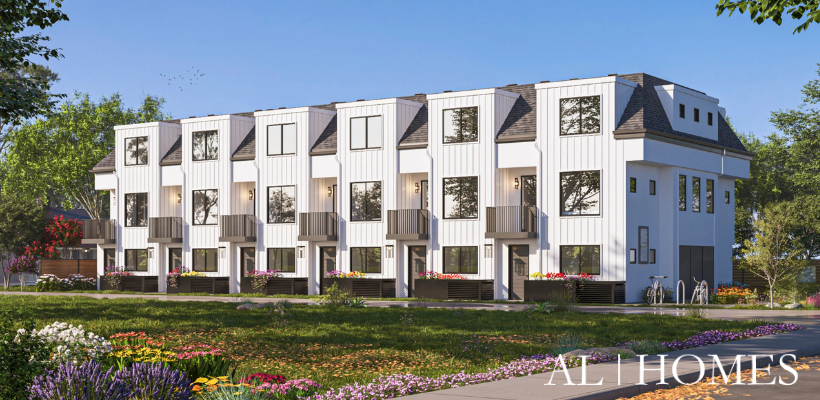
New townhomes are worth comparing if you want modern layouts and fewer aging components to plan around.
AL Homes manages land acquisition, design, and construction internally. Ask its team about warranties, ownership structure, proposed HOA dues, and maintenance coverage.
Upcoming communities include:
- The Crescent in Sunnyvale: Listed for 2027, with 18 homes and floor plans spanning 1,483–1,517 square feet.
- 300 Redding in Campbell: Listed for 2028, with six townhouse-style condos.
Already own a home? AL Homes’ Buy Now, Sell Later program lets you buy before you sell, subject to an eligibility review.
Listings, availability, and projected completion dates are subject to change. Confirm current details with the AL Homes team.
Find The Right Fit For Your Bay Area Home
Choosing between a condo and a townhouse means comparing total costs, maintenance responsibilities, and the space you need. Review each property’s ownership structure and community documents to understand what you’re buying.
Considering a new townhome? Explore AL Homes’ communities and ask the team about floor plans, ownership details, and purchase timelines.
FAQs: Condos And Townhouses
What is the difference between a condo and a townhouse?
A condo describes ownership, while a townhouse describes architectural design. Condos include a separately owned unit and shared property interests. Townhouses typically have multiple levels and private entrances.
Is a townhouse a condo?
It can be. A townhouse-style home may have condominium ownership or belong to a planned development. Check the recorded documents to confirm its legal ownership structure.
Which is cheaper, a townhouse or a condo?
The Santa Clara comparison shows a lower median price for two-bedroom condos. Individual prices vary. Compare mortgage payments, taxes, HOA dues, insurance, and repairs to assess total ownership costs.
Is a townhouse a condo for insurance?
Sometimes. A townhouse with condominium ownership may use HO-6 coverage, depending on the HOA’s master policy and owner responsibilities. Have your insurer review both before choosing coverage.
What is a townhouse-style condo?
It is a home with townhouse architecture and condominium ownership. It may have multiple levels and a private entrance, while land and exterior components follow the condominium’s recorded ownership boundaries.
Is a condo or townhouse a better investment?
Neither is automatically better. Compare purchase costs, HOA finances, property condition, and recent comparable sales. Local demand and the specific property matter more than assuming one type appreciates faster.